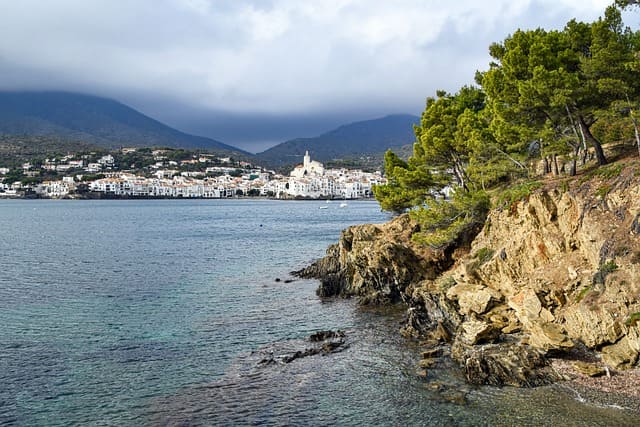
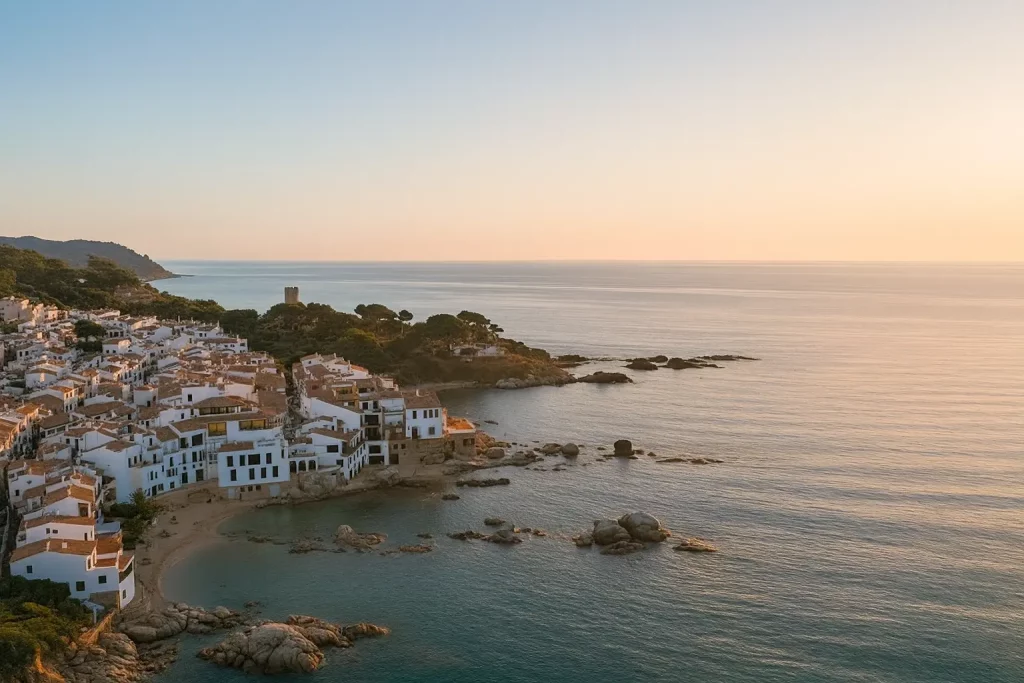
The first time I hopped from Canadell to Port Bo, I realized Calella is best enjoyed like a tapas crawl: today, sand to stretch out on; tomorrow, rocks to watch fish; the next day, a tiny cove for photos. To keep it simple, here’s my golden rule in two lines: if you see rock or plan to snorkel, water shoes—yes; if you stick to the central strip of sand (Canadell, Port Bo, Llafranc), water shoes—optional. With that settled, let’s break it down.
What you’ll notice underfoot
Here, coarse sand rules on the more urban beaches, and slabs and pebbles pop up in many corners and little coves. Getting into the water is usually gentle where there’s more sand and a bit uneven where rock dominates. With kids or sensitive feet, the central strip of the bigger beaches is your ally; if you like to explore the edges, water shoes give you grip and save you from the tiptoeing “ow, ow, ow.”
Where you hardly need water shoes (sand & comfort)
- Platja del Canadell. Wide, with a promenade and amenities. Entry: gentle and gradual. Access: stroller-friendly. Water shoes: unnecessary if you stay in the center; useful along the edges.
- Port Bo / Les Barques. Coarse sand next to the boats. Entry: easy; watch for rock slabs along the sides. Water shoes: optional.
- Els Canyissos (right next to Canadell). Small and sandy. Entry: comfortable. Water shoes: unnecessary unless you head onto the rocks.
- Platja de Llafranc (neighboring village, a short walk). Wide and sandy. Entry: very gradual. Water shoes: unnecessary; optional near the breakwaters.

Find your perfect stay in Calella & Llafranc Choose tourist rental, seasonal rental… or explore everything on the home page.
Pick an option below:
If you’re after snorkeling and beautiful rocky spots
- El Golfet. Small pebbles + rock beneath cliffs; crystal-clear water. Entry: pebbly—go in slowly. Access: sloped footpath. Water shoes: yes. Best time: morning (less wind and beautiful light).
- Port Pelegrí. It starts with sand and within a few meters rock takes over. Entry: the texture changes quickly. Access: urban. Water shoes: recommended—ideal for gentle snorkeling along the sides.
- Sant Roc (Els Canyers). Small and rocky, with a staircase descent from the viewpoint. Entry: short but stony. Space: very limited. Water shoes: yes.
Charming little coves in the town center
- En Calau. Sand with nearby rock slabs. Entry: there may be pebbles along the edges. Water shoes: recommended if you explore.
- Port de Malaespina. Mixed (sand + pebbles). Entry: irregular in some spots. Water shoes: useful.
- La Platgeta (Sa Platgeta d’en Cosme). Small and photogenic. Entry: sand with rock nearby. Water shoes: recommended if you enter along the edges.
Quick comparison to help you decide
Llafranc belongs to the same municipality and can be reached on foot via the coastal path.
No-fuss access and parking
If you’re going in peak season, arriving early is half the battle. Calella’s old town is narrow and car parks fill up fast. What works best for me:
- Arrive before 9:30 for Canadell/Port Bo to snag the “prime spot” for your umbrella.
- Perimeter parking + stroll: park a bit farther out and walk in; it’s a small town and the walk is pleasant.
- Stroller & stairs: if you’re bringing a stroller, stick to Canadell or Llafranc (ramps and promenades). Avoid Sant Roc if you don’t want to lug it up and down stairs.
- Light backpack: in tiny coves (Sant Roc, La Platgeta) less is more—towel, water, sunscreen, goggles, and water shoes.
Best times for wind and light
The Costa Brava can pick up an afternoon breeze. It’s not an exact science, but these patterns have worked for me:
- Mornings at El Golfet: the water is usually calmer and the light falls obliquely on the cliffs—great for photos and snorkeling.
- Afternoons at Canadell and Llafranc: more comfortable if it’s windy, with services close by for the perfect finish (ice cream, a stroll, sunset).
- Swell days: if you see some surf, stick to sandy spots with easy entries and save the rocks for another time.
Tips I use that save the day
- Put them on beforehand: if there’s hot rock or pebbles, go into the water already wearing your water shoes.
- Umbrella & rock: if you can’t stake it, use a large clip or a cord to secure it to your backpack.
- Kids & seabed: at Port Pelegrí the bottom turns rocky quickly; it’s better to stay close to the shore or move over to Canadell.
- Minimum kit: 2–3 mm water shoes; boot style for walking on rock, sock style for fins.
Quick questions
Where are water shoes almost unnecessary?
In the central strip of Canadell, Port Bo, and Llafranc.
Where is snorkeling best?
El Golfet and the sides of Port Pelegrí; Sant Roc if the sea is calm.
Which beach is the easiest with kids or a stroller?
Canadell and Llafranc for their width, gentle entry, and amenities.
Is there ultra-fine, powdery sand?
No—coarse sand predominates here; it’s nice because it doesn’t stick as much.
The final scene with the murmur of the boats
Calella is the kind of place you visit for “a quick dip” and end up hopping from cove to cove like you’re stretching out the aperitif. One day you linger on the sand at Canadell, the next you pull on water shoes for El Golfet, and you finish with a photo at Port Bo. If you keep the sand-vs-rock divide in mind and know when to say yes to water shoes, everything clicks: happy feet, pretty photos, and a strong urge to come back.